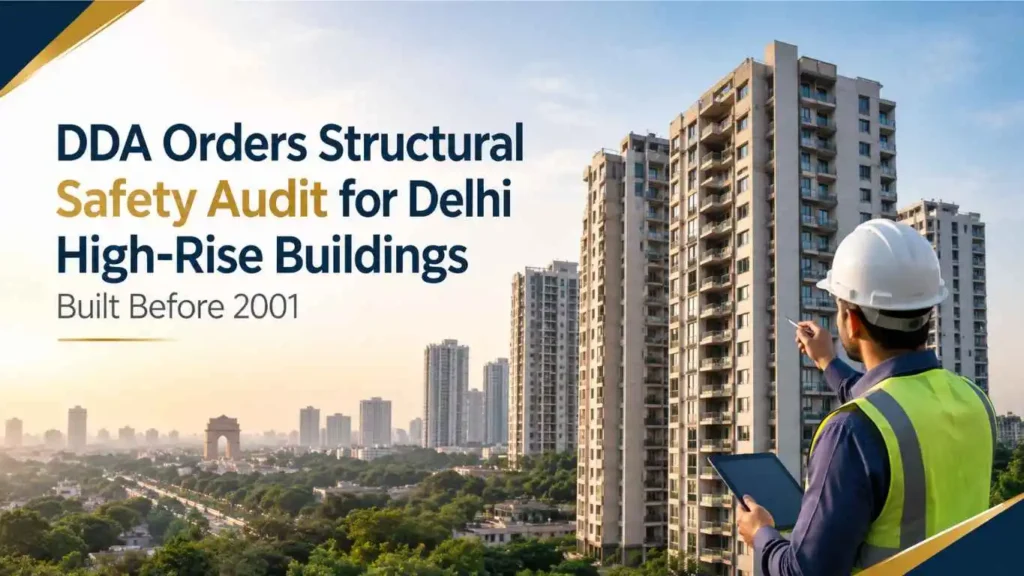
The Delhi Development Authority (DDA) has ordered mandatory structural safety audits for high-rise buildings in Delhi that were sanctioned before March 21, 2001. Under the latest public notice, owners of buildings measuring 15 metres or more must get their structures assessed within three months. The requirement also extends to certain buildings below 15 metres where there is high public footfall, including group housing, hospitals, educational and institutional buildings, cinema halls and assembly buildings. The DDA’s move is aimed at improving structural safety and addressing concerns related to the vulnerability of older buildings, including their ability to withstand earthquake-related risks.
What Is a Structural Safety Audit?
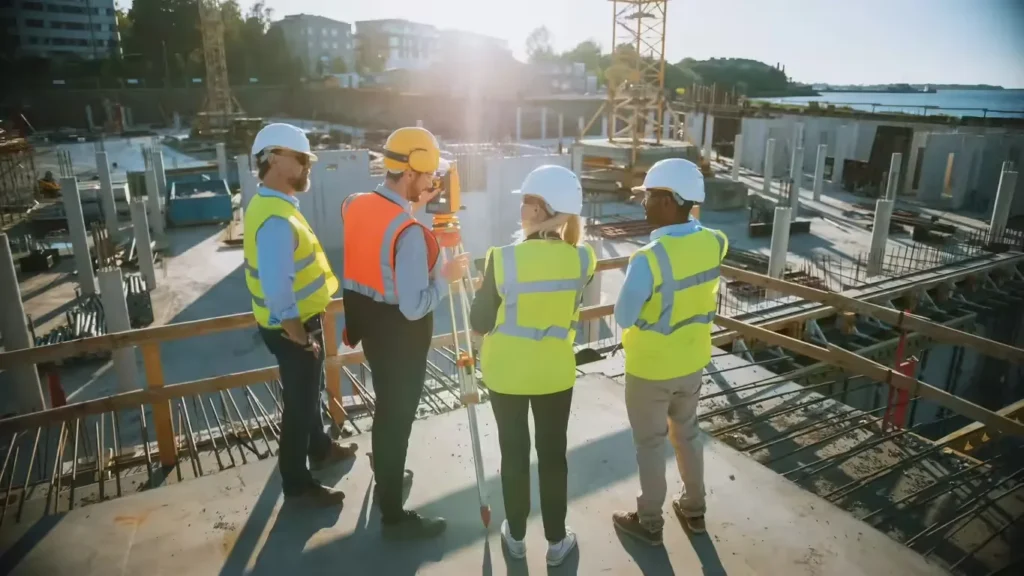
A structural safety audit is a technical assessment of a building carried out by qualified structural professionals to determine whether its structural components remain safe and stable. The assessment can examine elements such as the building’s structural framework and identify weaknesses that may require repair, strengthening or other corrective measures.
The DDA’s notice states that structural safety audits can be conducted by structural engineers empanelled with Municipal Corporations of Delhi, government institutes and other government agencies.
What Is a Structural Safety Audit?
A structural safety audit is a technical assessment of a building carried out by qualified structural professionals to determine whether its structural components remain safe and stable.
The assessment can examine:
Structural framework of the building
Columns, beams and slabs
Signs of structural damage or deterioration
Potential structural weaknesses
The need for repair or strengthening
Overall structural safety and stability
The DDA’s notice states that structural safety audits can be conducted by structural engineers empanelled with Municipal Corporations of Delhi, government institutes and other government agencies.
Which Buildings Are Covered Under the DDA Order?
The latest direction primarily covers high-rise buildings measuring 15 metres or above that were sanctioned before March 21, 2001.
The requirement also applies to certain buildings below 15 metres if they have significant public footfall.
These include:
Group housing buildings
Hospitals
Educational buildings
Institutional buildings
Cinema halls
Assembly buildings
Building owners covered under the direction have three months to complete the required structural safety assessment.
Why Is March 21, 2001 Important?
The date March 21, 2001 is linked to changes in Delhi’s building regulations concerning seismic safety.
DDA’s earlier public notice states that seismic provisions were incorporated into the Building Bye-Laws 1983 through a notification dated March 21, 2001.
Therefore, the latest direction particularly focuses on buildings that were sanctioned before this date.
Delhi’s location in a seismically active region also makes structural safety an important consideration for older buildings. The latest DDA direction specifically highlights structural safety against earthquake-related risks.
What Do Building Owners Need to Do?
Owners of buildings covered by the order need to arrange a structural safety audit through an eligible structural engineer or agency.
The process can help identify whether the building requires:
Structural repairs
Strengthening
Retrofitting
Other necessary corrective measures
If structural deficiencies are identified, owners will have to undertake the required retrofitting and corrective work.
The DDA has also indicated that action may be taken in cases of non-compliance.
What Is Retrofitting?
Retrofitting refers to strengthening or improving an existing building so that its structural performance and safety can be improved.
The exact type of retrofitting required depends on the:
Age of the building
Structural condition
Design and construction
Nature of the identified weakness
Technical recommendations of the structural professional
It is important to note that retrofitting does not automatically regularise unauthorised construction or unauthorised use.
Why Is This Important for Delhi Real Estate?
The DDA’s latest direction brings greater attention to the structural condition, safety and compliance of older properties in Delhi.
For residential societies, commercial buildings and other properties covered by the order, structural assessments may become an important part of:
Property maintenance
Building safety
Regulatory compliance
Long-term property management
For buyers and investors considering older buildings, the development also highlights the importance of checking more than just the property’s location and price.
Property due diligence should also consider:
Building approvals
Structural condition
Maintenance records
Compliance status
Previous structural assessments
Any recommended or completed corrective work
What Does This Mean for Property Buyers?
The DDA order does not mean that every building constructed before 2001 is unsafe.
Instead, the direction establishes a requirement for covered buildings to undergo a structural safety assessment.
For buyers considering an older property, it can therefore be useful to ask for relevant documentation and understand:
Whether the building falls under the DDA’s requirement.
Whether a structural safety audit has been conducted.
Whether any structural issues were identified.
Whether corrective work or retrofitting was recommended.
Whether the required work has been completed.
This can provide a clearer picture of the property’s structural condition and compliance status before making an investment decision.
Real Estate Impact
The DDA’s mandatory structural safety audit direction puts renewed focus on the safety and maintenance of older buildings in Delhi.
The order could increase attention towards:
Structural safety
Property maintenance
Regulatory compliance
Building inspections
Property due diligence
For buyers and investors, structural condition and compliance may become increasingly important factors when evaluating older residential and commercial properties.
Conclusion
The DDA’s mandatory structural safety audit direction puts renewed focus on the safety and maintenance of older buildings in Delhi.
High-rise buildings sanctioned before March 21, 2001, along with certain high-footfall buildings below 15 metres, are required to undergo assessment within the prescribed three-month period.
Where structural issues are identified, owners will need to undertake appropriate corrective measures or retrofitting.
For Delhi’s real estate market, the development reinforces the importance of structural safety, regulatory compliance and proper property due diligence when owning, buying or investing in older properties.
Frequently Asked Questions
What is the DDA structural safety audit order?
The DDA has directed covered older buildings in Delhi to undergo structural safety audits to assess their structural condition and safety.
Which high-rise buildings need a structural safety audit?
High-rise buildings measuring 15 metres or more that were sanctioned before March 21, 2001 are covered by the latest direction.
Do buildings below 15 metres also require an audit?
Certain buildings below 15 metres with high public footfall, such as hospitals, educational buildings, group housing and assembly buildings, are also covered.
What is the deadline for the structural safety audit?
The DDA's latest direction gives covered building owners three months to complete the structural safety audit.
What happens if structural problems are found?
Owners will have to undertake appropriate retrofitting and corrective measures where structural deficiencies are identified.
Who can conduct the structural safety audit?
The DDA says structural engineers empanelled with MCDs, government institutes and other government agencies can conduct the audits.
Does retrofitting legalise unauthorised construction?
No. Retrofitting does not automatically constitute sanction or regularisation of unauthorised construction or unauthorised use.