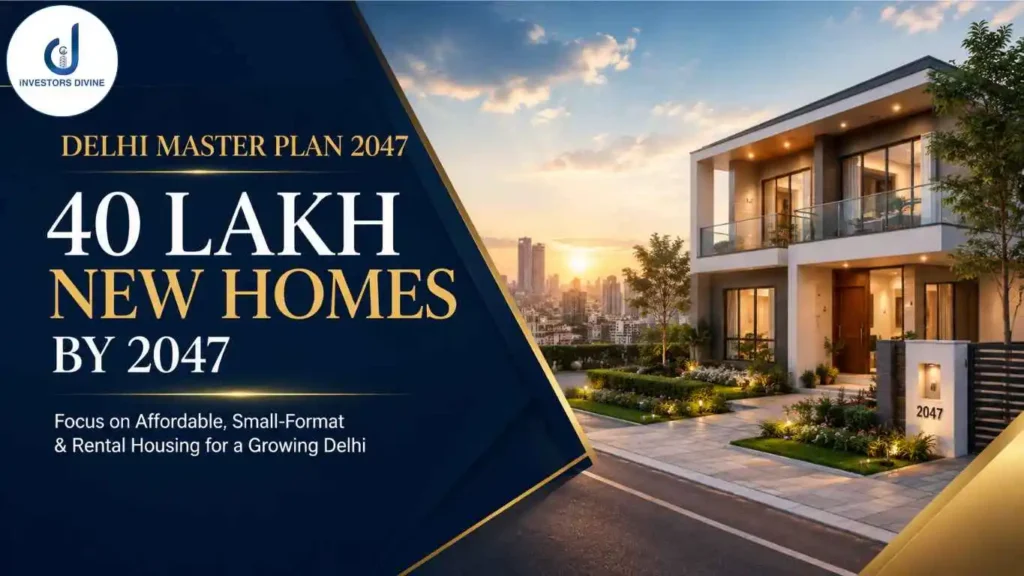
Delhi is preparing for a major urban transformation with the approval of the Draft Master Plan 2047 by the Delhi Development Authority (DDA). The plan estimates that the national capital will require nearly 40 lakh additional homes by 2047 to accommodate its growing population and changing housing needs. The proposal focuses on affordable housing, rental accommodation, redevelopment, land pooling and transit-oriented development to ensure planned and sustainable growth.
For homebuyers, developers and investors, the Master Plan 2047 could become one of the most significant policy frameworks shaping Delhi’s real estate market over the next two decades.
Why Does Delhi Need 40 Lakh New Homes?
According to the draft plan, Delhi’s population is expected to reach around 3.2 crore by 2047, creating demand for nearly 40 lakh additional dwelling units. The estimate is based on an average household size of 4.5 persons and reflects the need for housing across various income groups.
The housing challenge is not only about quantity but also affordability. Rising property prices have made homeownership difficult for many residents, while the supply of affordable homes has remained limited. The new plan aims to address this gap by promoting a wider range of housing options.
Focus on Affordable and Small-Format Housing
One of the key highlights of Delhi Master Plan 2047 is its emphasis on small-format homes and affordable housing. The strategy recognizes that a large section of Delhi’s population requires compact and budget-friendly residential options rather than large premium apartments.
The plan also encourages:
Affordable housing projects
Small-format residential units
Housing for lower and middle-income groups
Sustainable and efficient urban development
This approach is expected to improve housing accessibility while making better use of available land resources.
Rental Housing to Play a Bigger Role
The Master Plan acknowledges the growing demand for rental accommodation in Delhi. Students, working professionals, migrants and industrial workers often rely on rental housing due to affordability and mobility requirements.
To address this demand, the plan proposes:
Affordable Rental Housing Complexes (ARHCs)
Hostels and dormitories
Worker housing facilities
Student accommodation projects
A stronger rental housing ecosystem could help reduce pressure on ownership housing while offering more choices to residents.
Land Pooling and TOD to Drive Future Growth
A major portion of future housing supply is expected to come through Land Pooling Areas and Transit-Oriented Development (TOD) Zones. The Master Plan identifies these as key growth engines for Delhi’s future expansion.
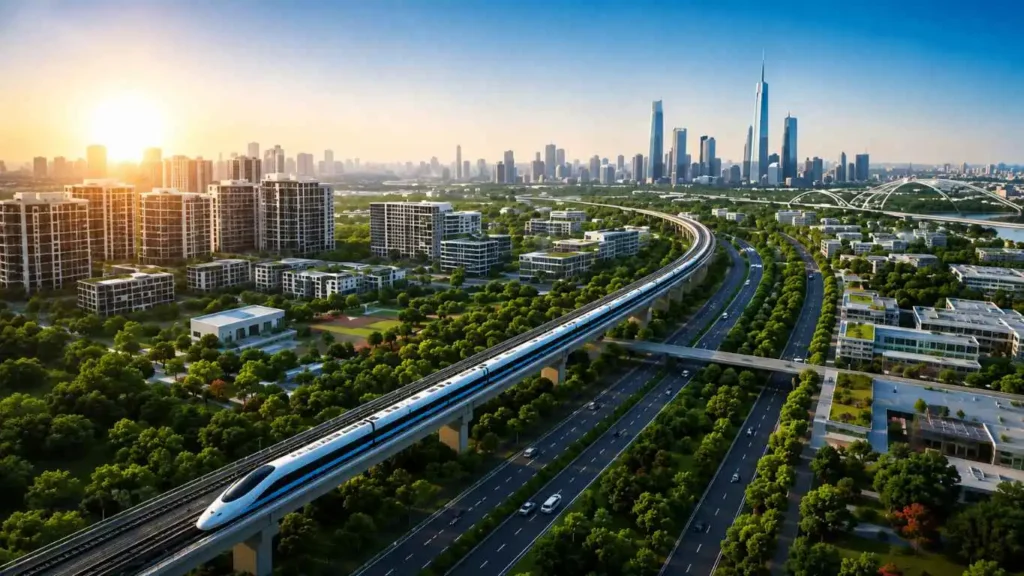
Transit-Oriented Development focuses on creating high-density residential and mixed-use developments around Metro, RRTS and railway corridors. Under the revised framework, development opportunities around major transit networks are expected to increase significantly.
Similarly, the Land Pooling Policy is designed to unlock large land parcels for planned urban development while encouraging private sector participation. The policy could create new residential hubs and improve infrastructure in emerging areas of Delhi.
Redevelopment of Existing Housing Areas
Apart from creating new housing supply, the Master Plan also focuses on improving existing residential neighbourhoods. Several older housing colonies and residential developments may undergo regeneration and redevelopment to enhance living standards and infrastructure.
The proposal includes:
Regeneration of older DDA housing
Redevelopment of ageing group housing societies
Improvement of public amenities
Better infrastructure and urban services
These measures aim to improve the quality of life while maximizing the use of existing urban land.
Addressing Unauthorised Colonies and Slum Rehabilitation
The Master Plan also seeks to improve housing conditions in unplanned settlements. It proposes the regularisation and upgradation of unauthorised colonies while promoting in-situ rehabilitation of slums and JJ clusters wherever possible.
The objective is to provide better infrastructure, road networks, civic facilities and access to essential services while minimizing displacement of residents.
What Does It Mean for Delhi Real Estate?
Delhi Master Plan 2047 has the potential to reshape the city’s real estate landscape over the coming decades. Increased focus on affordable housing, rental accommodation, transit-oriented development and planned expansion could create new opportunities for developers and investors.
Key potential benefits include:
Higher housing supply across segments
Growth of transit-linked residential corridors
New investment opportunities in land pooling areas
Improved urban infrastructure
Better housing affordability and accessibility
However, the actual impact will depend on how effectively the policies are implemented and executed on the ground.
Conclusion
The Delhi Master Plan 2047 is a long-term vision aimed at meeting the housing needs of a growing population while promoting planned and sustainable urban development. With an estimated demand for 40 lakh additional homes, the plan places strong emphasis on affordable housing, rental accommodation, land pooling, redevelopment and transit-oriented growth. If implemented successfully, it could become a major catalyst for the future growth of Delhi’s real estate market and create new opportunities for homebuyers, developers and investors alike.